MANY MUCH MOST MORE
5 March – 19 April
In 1950s New York, at the height of Abstract Expressionism, a quip is said to have been made by the painter Ad Reinhardt, or possibly Barnett Newman, depending on the account, about sculpture’s status in relation to painting and its position in the hierarchy of media. It went: “Sculpture is something you bump into when you back up to look at a painting.” One can imagine the roar of laughter this provocation received during debate at the Cedar Tavern, among painters fuelled by cheap beer and the writings of the era’s most influential critic, Clement Greenberg.
Putting aside uncertainties over the quip’s provenance and its historically familiar subordination of sculpture to painting, it nonetheless captures a central late-modernist conviction: that sculpture occupied a fundamentally different space from painting. It was not on a wall, not flat, not framed, not painted. Each medium, in order to retain its purity, was to remain distinct and self-contained.
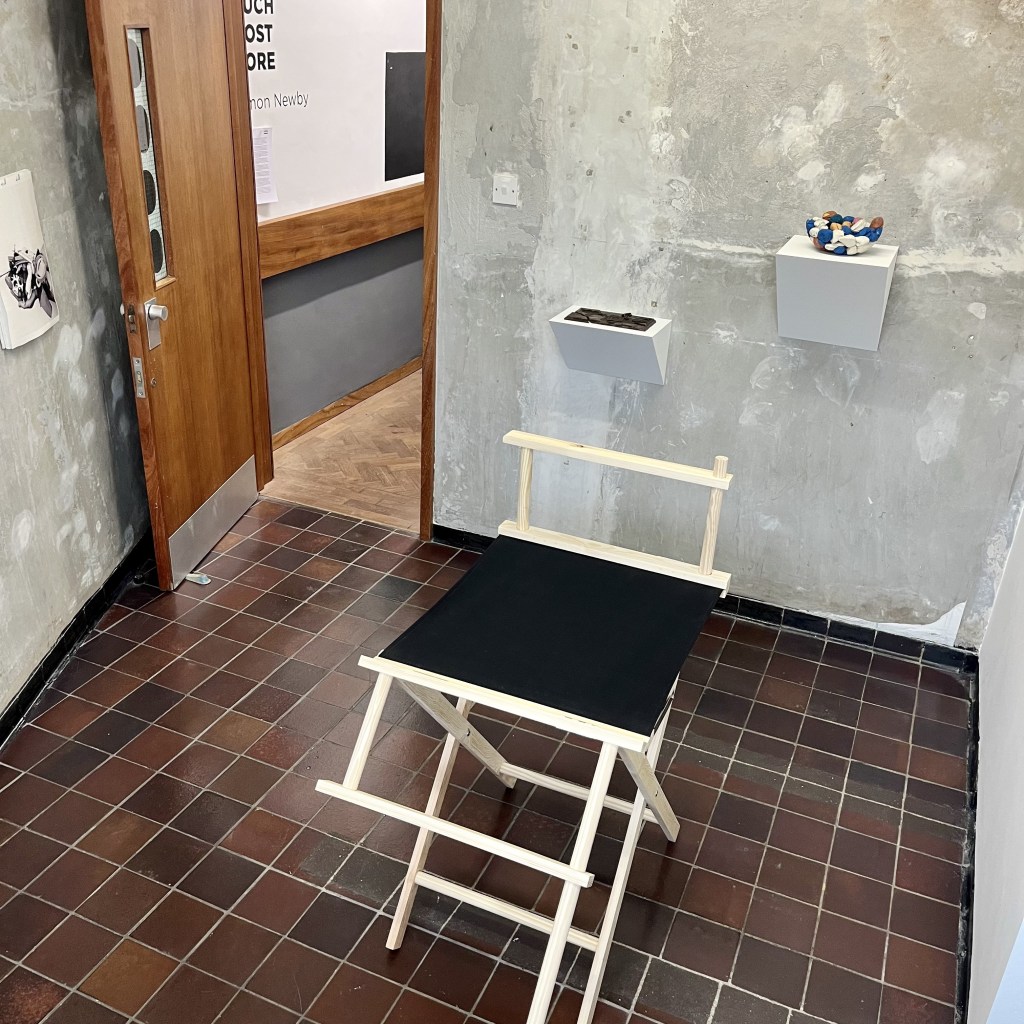
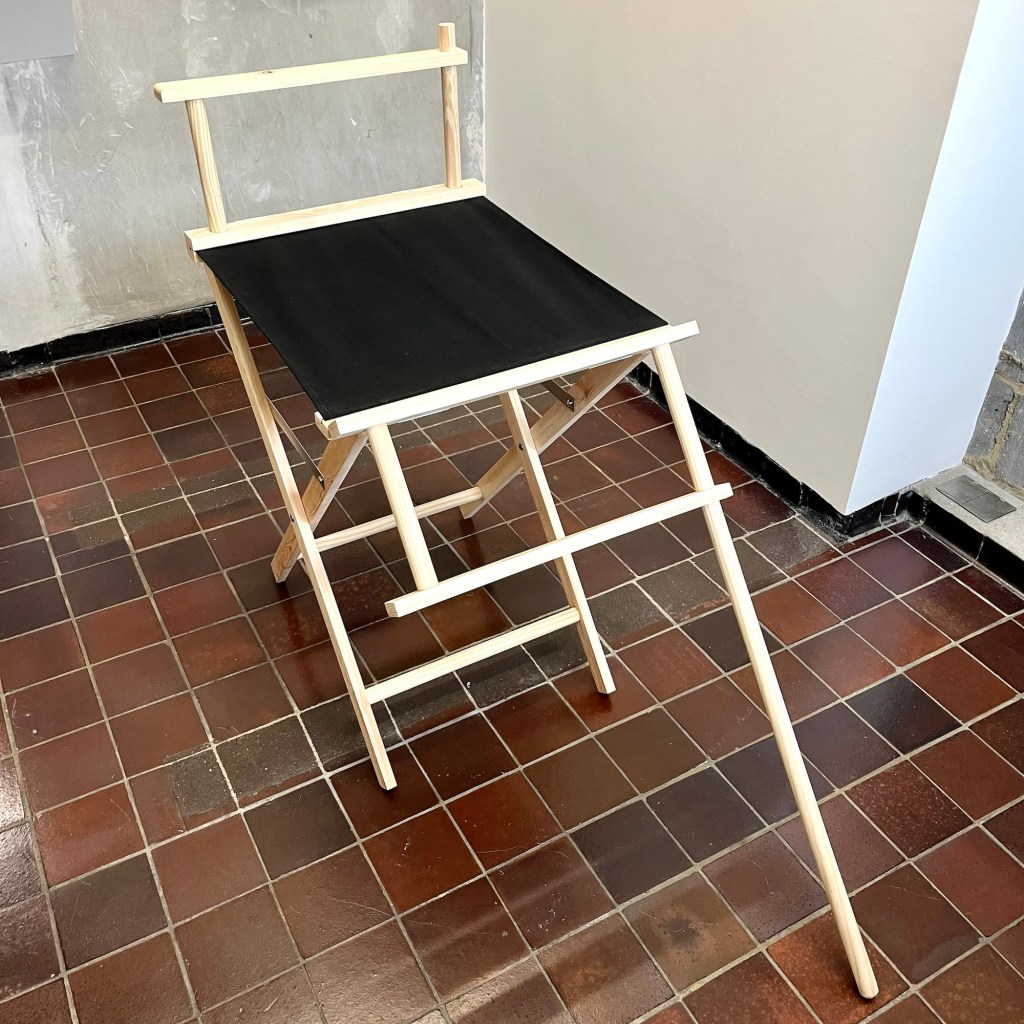
MMXXVI, with its ironically monumental Roman numeral title, adopts the portable design of the ‘scissor-action’ director’s chair (a form historically rooted in the ceremonial Roman curule seat). Though enlarged, partially dismantled, and reconfigured, the structure continues to support its black, colour-field canvas seat, held taut like a suspended plane of painting. The object’s architecture appears compromised, yet it remains stubbornly functional.
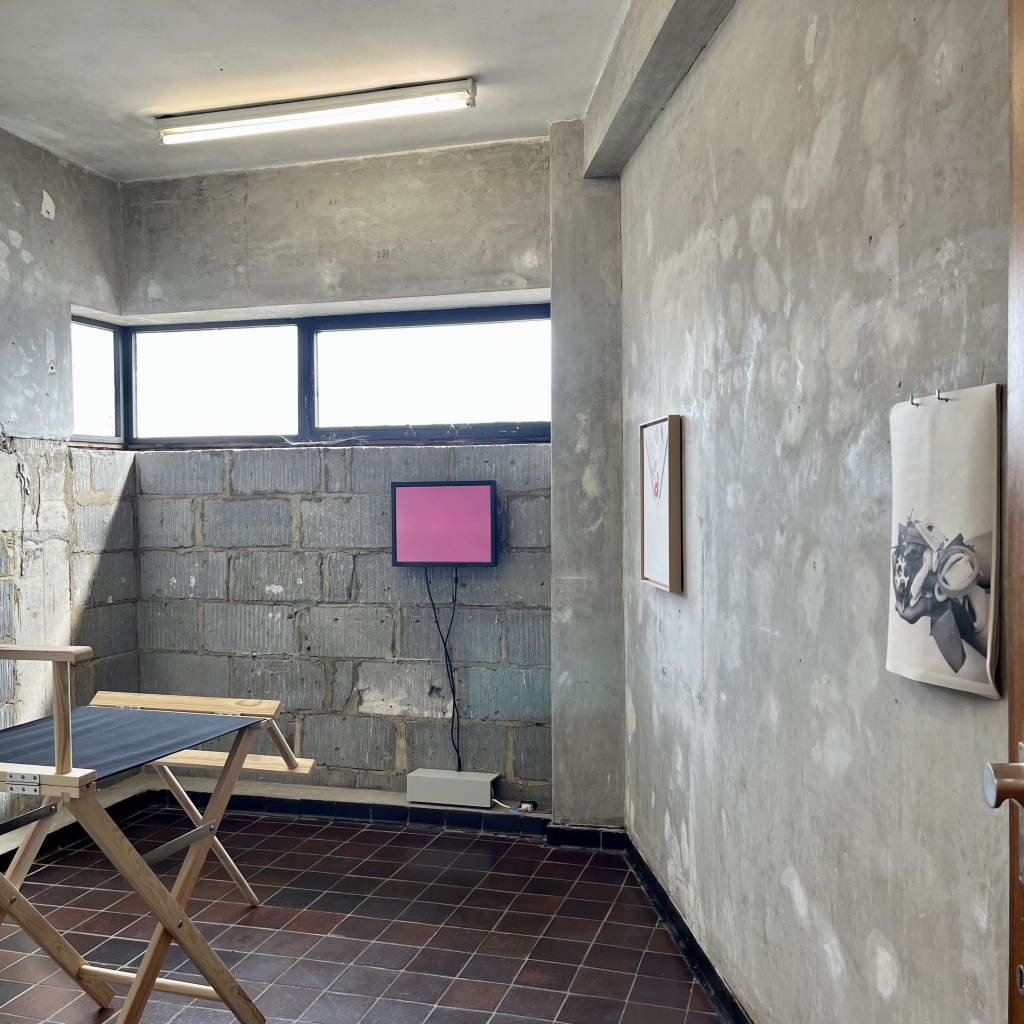
The scissor-action of the director’s chair finds a literal manifestation in the single-channel video Paper, Scissors. Here, the sculptural act is reduced to a simple, repetitive gesture: the cutting of sheets of coloured paper in half. What initially reads as a flat field of colour on screen is gradually revealed to be three-dimensional paper; once cut, each piece drops against a white ground, forming a chance composition shaped as much by gravity as by the artist’s hand.
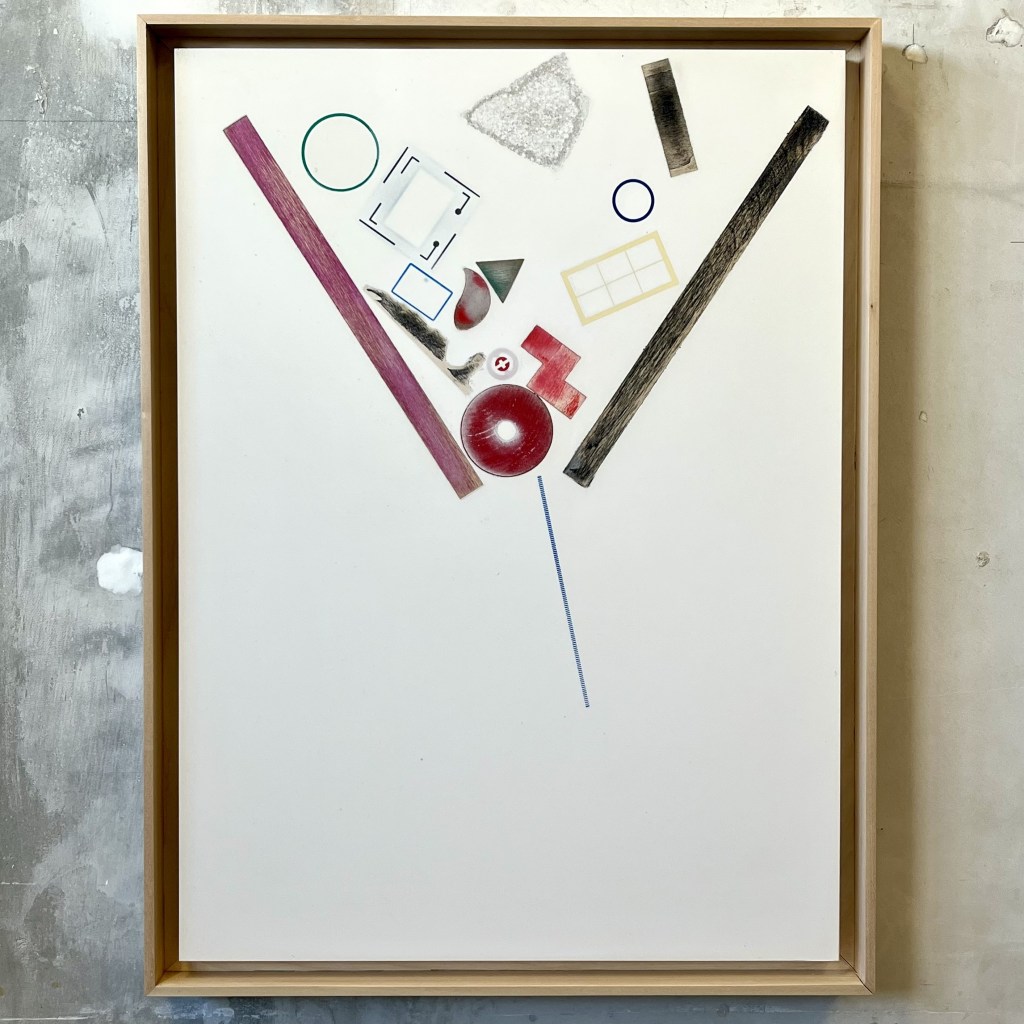
Red Apples Fall also plays a subtle game of surface and depth. Three-dimensional objects—wood, modelling clay, plastic—are formally composed and embedded within an acrylic composite. The slab is then polished to a smooth surface in which the objects appear as flattened shapes, creating a confusion between object and image. Depth is not eliminated but concealed, fossilised beneath the surface.
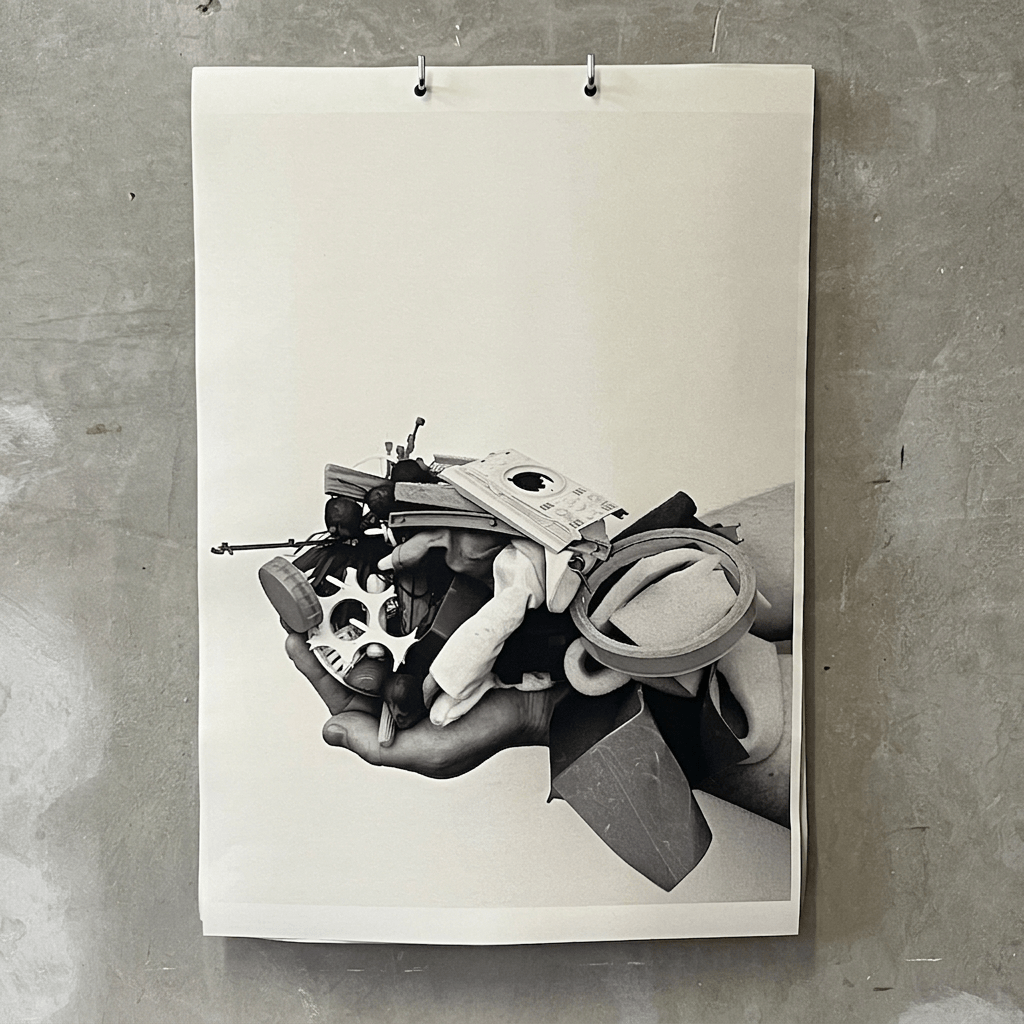
A seemingly random collection of everyday objects is also offered to us in a photograph from the series Pictures of Sculptures. An outstretched hand overflows with what appear to be discarded, possibly useless items, piled together in a precarious cluster—what Philip K Dick described as “kipple”, the gradual accumulation of trivial things. It remains unclear whether they form several small involuntary sculptures or a single larger one, momentarily balanced for the photograph to be taken. Here, the hand functions as a temporary support, a cornucopia of kipple that offers up debris as sculpture. Made as an endless edition, visitors are invited to take a copy.
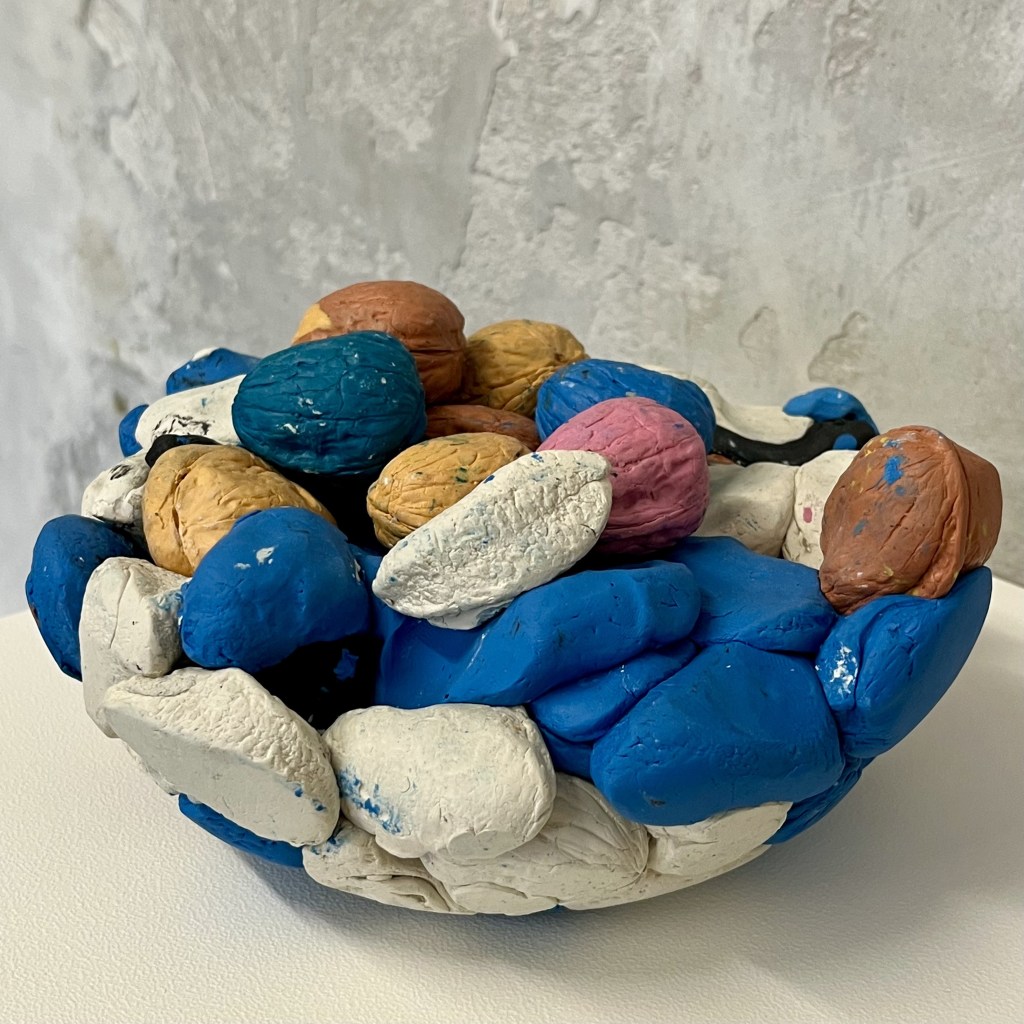
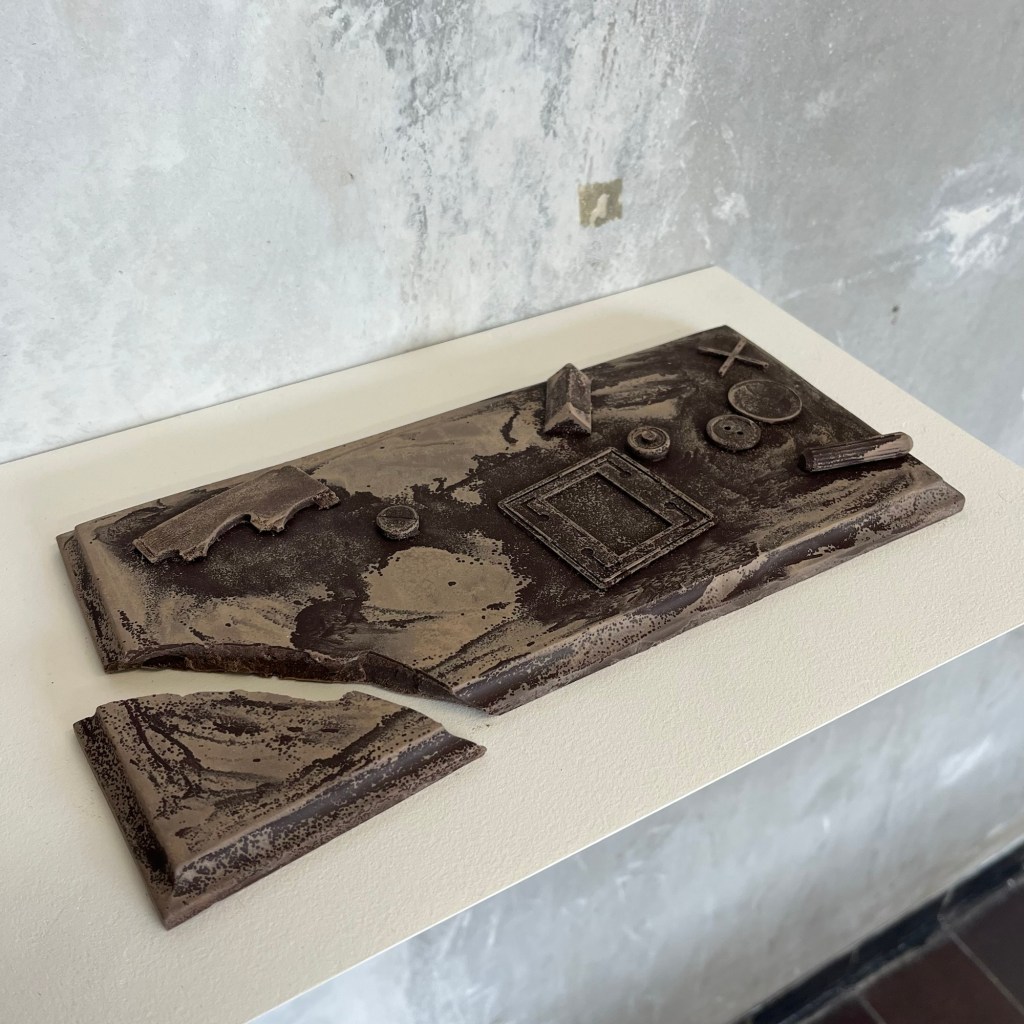
Cloak, plug, grip, night, chip, ride and Kipple make a classic culinary pairing of chocolate and nuts. Both works employ the technique of moulding. In one, modelling clay is shaped into the likeness of assorted nuts, their clustered arrangement suggesting they have settled into the curve of a bowl that forms the sculpture’s base. In the other, chocolate casts small miscellaneous objects arranged upon a plinth, itself made of chocolate. Each carries a distinct scent, extending the sculptural encounter beyond the visual.