
The Evans and Gilhooly Show
1 May – 21 June
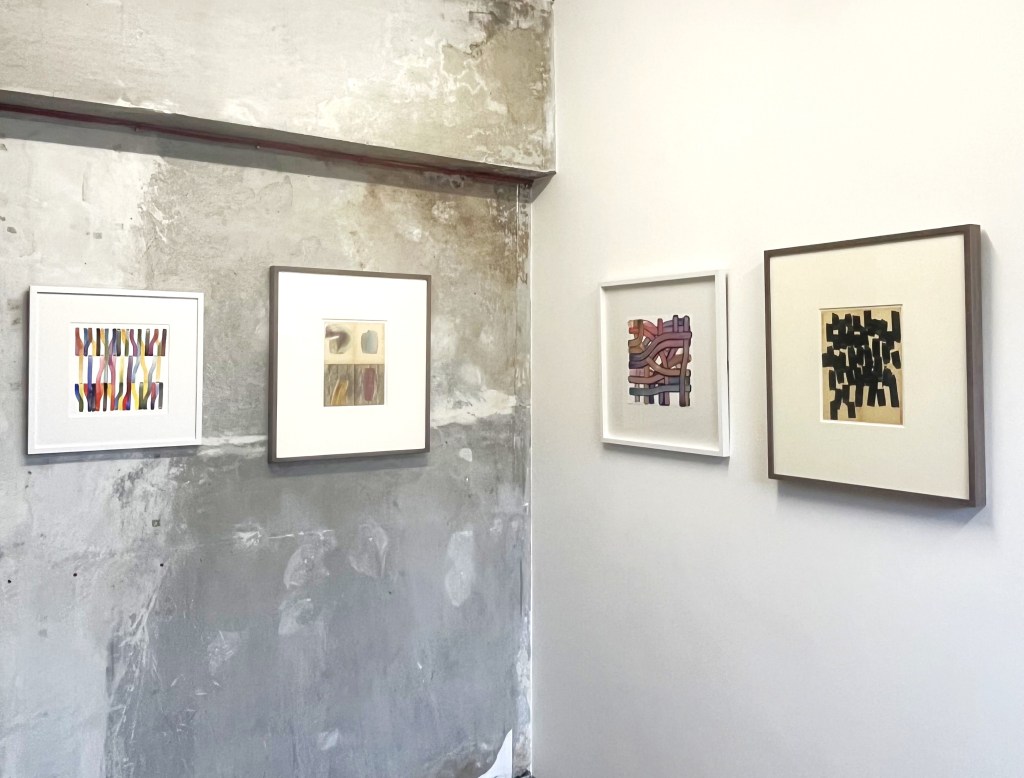
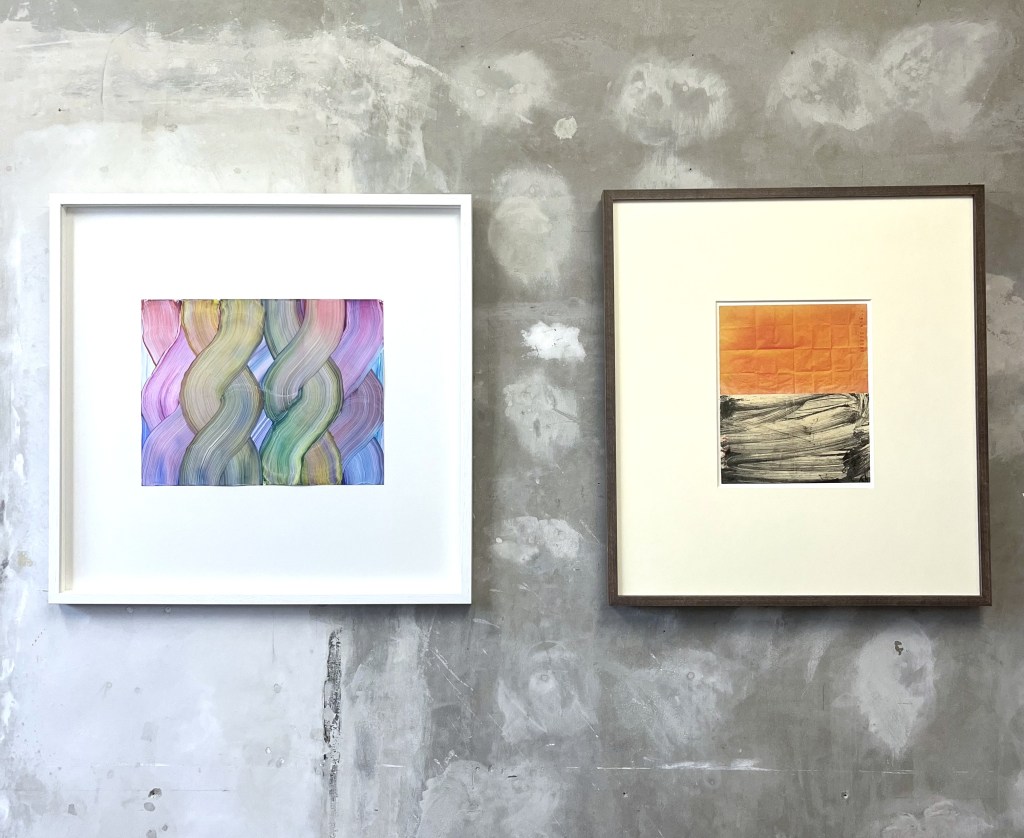
Stig Evans and Jonathan Gilhooly have collaborated before, most notably on Colour Conundrum (2010), a speculative reconstruction of a Victorian parlour game, thought to have been the creation of inventor, colour theorist and polymath Charles Albert Keeley. Colour Conundrum brought together the two artists’ shared interest in colour, perception, simulation, deception, and illusion. Colour Conundrum was originally shown as part of Wormhole Saloon at the Whitechapel Gallery, and then during White Nights at Phoenix Art Space, Brighton. In 2025, as part of the International Colour Association’s symposium on “Spatialities & Colour,” they presented a talk about Colour Conundrum titled “Origins of a Parlour Game”. Conversations between the artists further developed shared ideas, specifically in relation to painting, leading to the present exhibition at Gallery Dodo.
Stig Evans
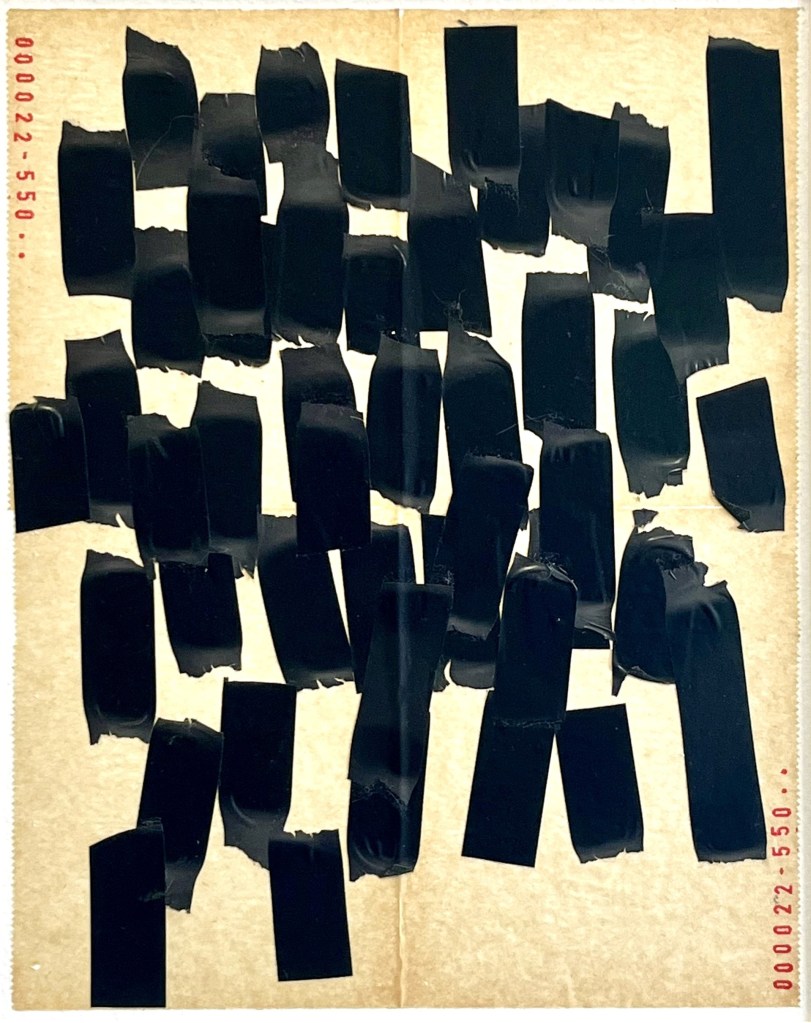
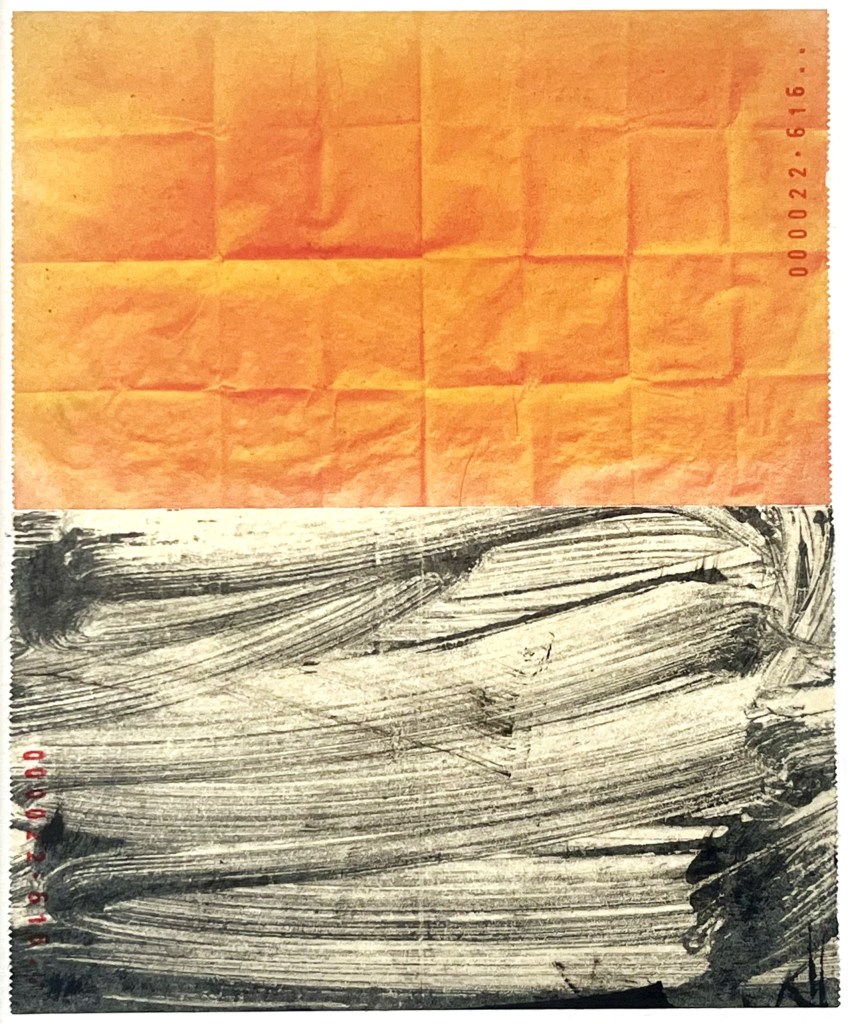
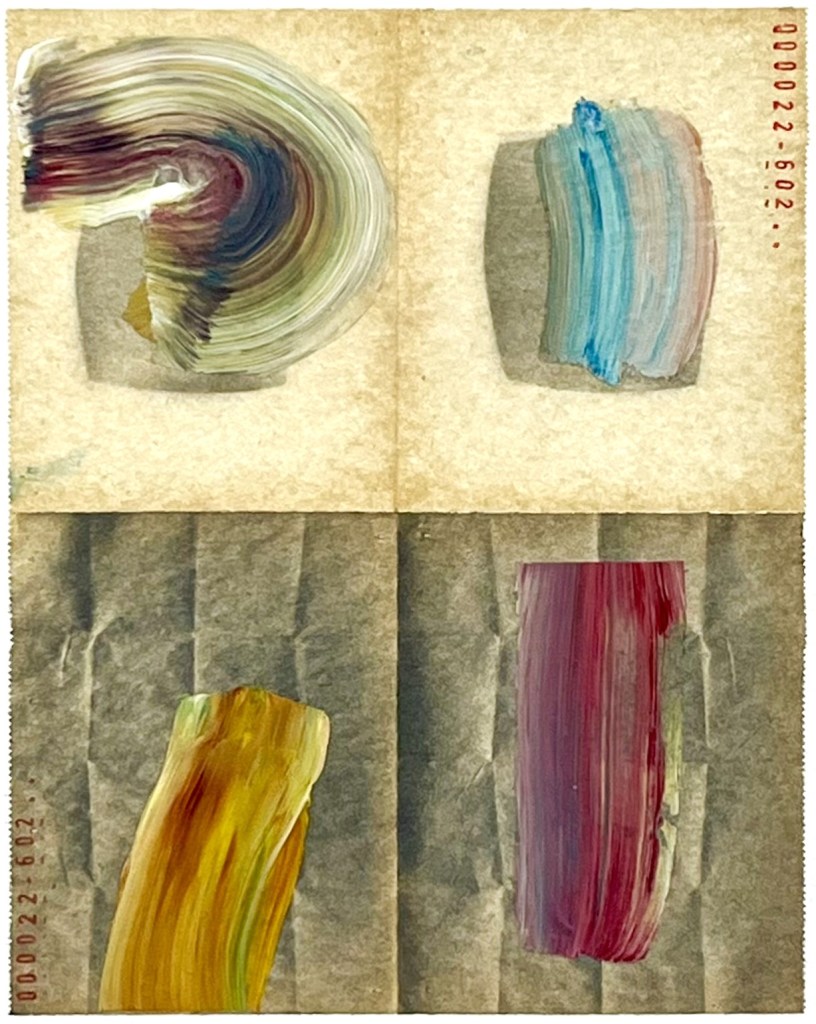
My interest in the use of ‘vintage’ toilet paper for these works is primarily material: the contrast or tension between the paper’s objectness and the illusionistic effects created by the painted surface. At the same time, this material carries associations – not least the suggestion of intrinsic disposability. The works exhibited here form part of a series, wherein two sheets, positioned one above the other, supply the basic grid structure. Each of the pair of sheets is treated in subtly different ways, prompting a comparative reading; stamped indexes suggest journal pages or archived documents. I usually paint or draw on multiple individual sheets at a time, forming a kind of archive. The sheets are pulled from the original box as I work, and although produced carefully, they are made without preciousness, thereby retaining their sense of disposability. A very deliberate curatorial process then follows, in which the painted sheets are selected and paired; a shift in value then occurs, with typically just one pairing being ultimately chosen and displayed.
Jonathan Gilhooly
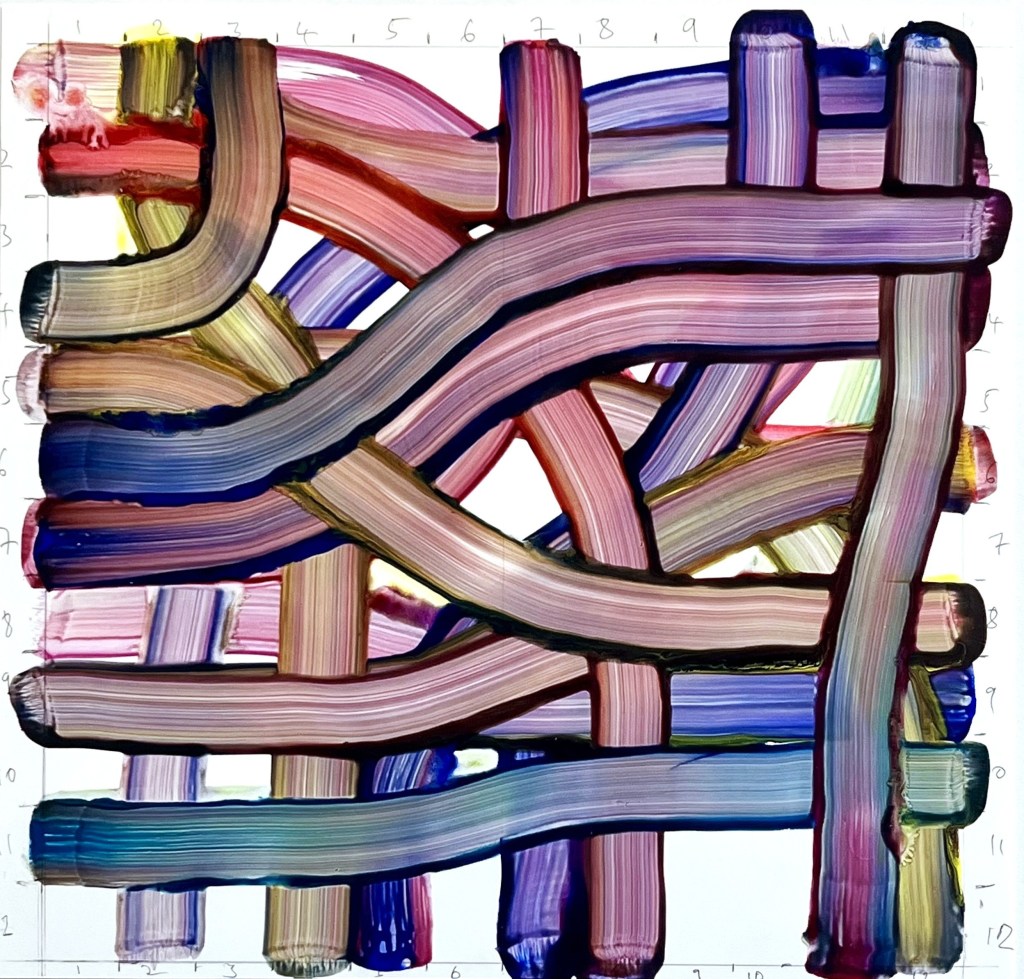
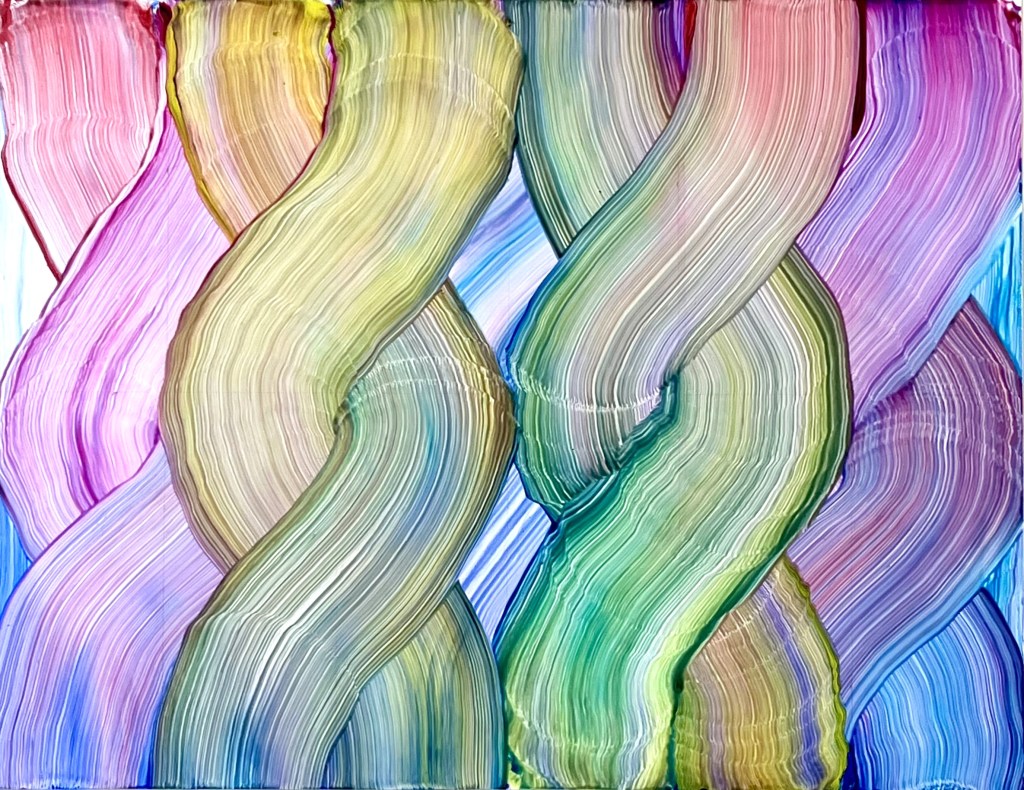
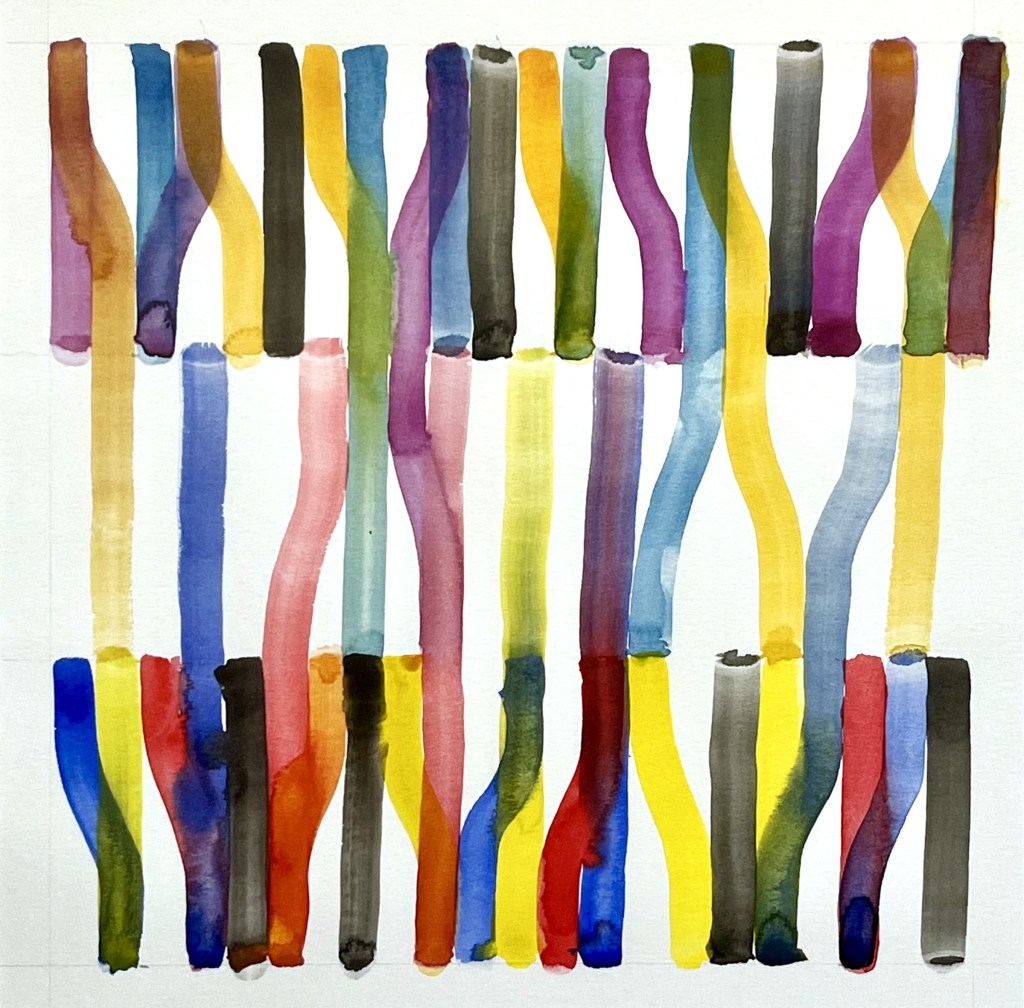
These paintings belong to a recent series revisiting ideas that first occupied me during my three years studying Fine Art in Manchester several decades ago. At that time, I was exploring simple generative systems as a means of producing paintings: overlapping grid structures, number progressions, or chance operations to determine colours. I was listening to ‘gradualist’ or process music (Glass, Reich, etc), and was introduced, by my tutor Brian Morley, to contemporary British and Swiss painters deploying similar systematic approaches.1 These were all artists who, to some degree, eschewed overt control in favour of rule-based procedures of various kinds, in order to generate pictorial (or musical) content. I retain an affection for these artists and their methods and – for reasons which I can’t fully rationalise – keep returning to the ideas their work embodies, looking for fresh perspectives on their application and efficacy. For example, I want the ‘facture’ of the painting to be evident in the finished piece, including, if possible, its temporal aspect – the speed of its performance. Mostly the paintings have to be completed quickly and in a single ‘take’, sometimes using both hands. Certain decisions are therefore settled in advance, leaving unanticipated events to be negotiated during their execution.
___________________
1 Jeffrey Steele, Noel Forster, Michael Kidner, Richard Paul Lohse, Max Bill, and others.

